The Best Work Comes From the Hardest Rooms
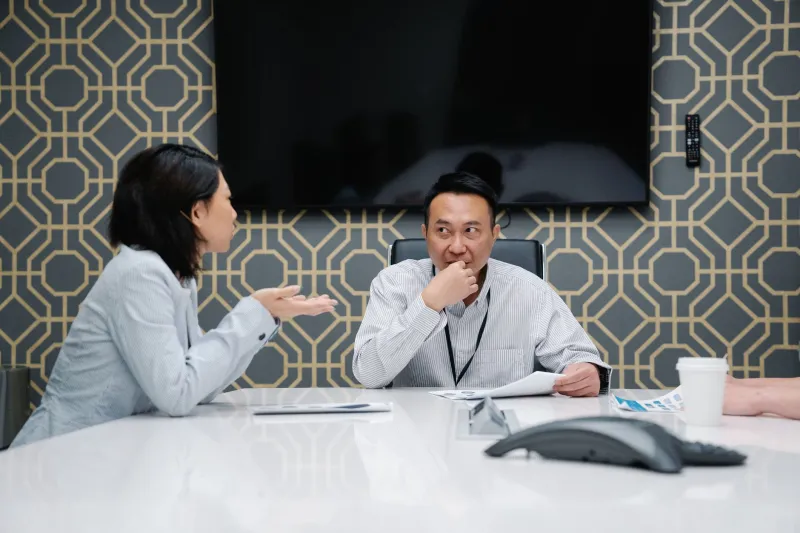
Ask any creative director about their most celebrated project and there's a decent chance the story involves a moment where everything almost fell apart. A client who hated the first three rounds. A concept that got killed and then resurrected. A meeting where someone on the brand side said "this is too risky" and someone on the agency side said "that's exactly why we have to do it."
Creative mythology is full of these stories. And they're not just good anecdotes — they're pointing at something real about how breakthrough work actually gets made.
Why Comfort Produces Average Work
There's a natural human tendency to want the creative process to be smooth. Clients want to feel like they're getting what they paid for. Agencies want to keep the relationship healthy. Everyone wants to walk out of the meeting feeling good.
The problem is that "feeling good" and "making great work" are not the same objective. In fact, they're often in direct conflict.
When the room is too comfortable — when the client approves too quickly, when there's no pushback on the first concept, when everyone nods along — it usually means the work is safe. And safe work doesn't move culture. It fills space.
Some of the most culturally resonant campaigns of the last decade came from processes that were, by most polite definitions, a mess. Not chaotic in a destructive way, but genuinely contested — where the client and the creative team had fundamentally different ideas about what the work should be, and neither side gave in easily.
That friction, when it's channeled right, is where the interesting stuff lives.
The Difference Between Good Friction and Bad Friction
Not all conflict is productive. There's an important distinction between creative resistance — which is generative — and organizational dysfunction — which is just exhausting.
Bad friction looks like: a client who changes the brief three weeks into production because of internal politics. An agency that digs in on a concept out of ego rather than conviction. A revision process where feedback is vague, contradictory, or driven by personal taste rather than strategic thinking.
Good friction looks like: a client who challenges the creative team's assumptions from a place of genuine strategic concern. A creative director who refuses to water down a concept and can articulate exactly why. A standoff where both sides are fighting for the work rather than against each other.
The difference is intent. Good friction is about the work. Bad friction is about something else — control, fear, hierarchy, or just a bad relationship.
Pushback as Creative Respect
Here's a reframe that doesn't get enough airtime in agency-client conversations: when a creative team pushes back hard, it's a sign of respect.
It means they've taken the brief seriously enough to have a genuine point of view. It means they're invested in the outcome. It means they're not just executing — they're thinking.
The creative teams that never push back are usually the ones who've learned, through painful experience, that pushback doesn't go well in that particular relationship. They've been conditioned to present safe options, get quick approvals, and move on. The work suffers. The relationship feels fine. And the brand slowly fades into the background.
The best client-agency relationships are the ones where pushback is expected, welcomed, and argued out properly. Where the client can say "I hear you, and here's why I still think we need to go this direction" and the creative team can say "understood — but let us show you one more thing before you decide."
That back-and-forth isn't inefficiency. It's the process working as it should.
What Clients Who Get Great Work Actually Do
There's a pattern among the brands that consistently produce work that cuts through — and it's not that they have bigger budgets or better agencies. It's that they've built a relationship with friction.
They hire creative partners specifically because those partners see the world differently than they do. They don't expect alignment out of the gate. They come to presentations ready to be challenged, not just to approve.
More importantly, they've developed the organizational muscle to sit with discomfort long enough to let it become something useful. That means protecting the creative team from internal pressure to "just make it safer." It means being willing to go to bat internally for a piece of work that makes some stakeholders nervous. It means treating creative tension as a signal that something interesting is happening — not as a problem to eliminate.
The Anatomy of a Productive Fight
If you want to build friction into your creative process intentionally — rather than just hoping it shows up — here's what that actually looks like in practice:
Start with a genuine creative brief, not a wishlist. The more open-ended the problem, the more room there is for real creative thinking — and real creative disagreement.
Build in a "challenge" round before revisions. After the first presentation, before any changes are made, give both sides the space to argue their positions. The client argues for what they need strategically. The creative team argues for what they believe creatively. Then decide together what moves forward.
Protect the outlier concept. Most creative presentations include one idea that makes the room a little uncomfortable. That one deserves at least a full conversation before it gets cut. Nine times out of ten, the outlier is where the real work is hiding.
Reward creative conviction. When a creative team holds their ground on something and turns out to be right, acknowledge it. That kind of accountability builds trust in both directions — and makes the next round of friction more productive.
The Work That Hurts a Little Is the Work That Lasts
The campaigns that people still talk about years later — the ones that shifted cultural conversations, built genuine brand loyalty, or made an entire industry rethink what was possible — almost never came from an easy process.
They came from rooms where somebody got uncomfortable. Where a creative team fought for something they believed in and a client was brave enough to let them. Where the tension between "what we want" and "what the work needs" got held long enough to resolve into something neither side could have gotten to alone.
That's the part of the creative process nobody puts in the case study. But it might be the most important part.